8 Things a Kitchen Respray Dublin Quote Should Spell Out
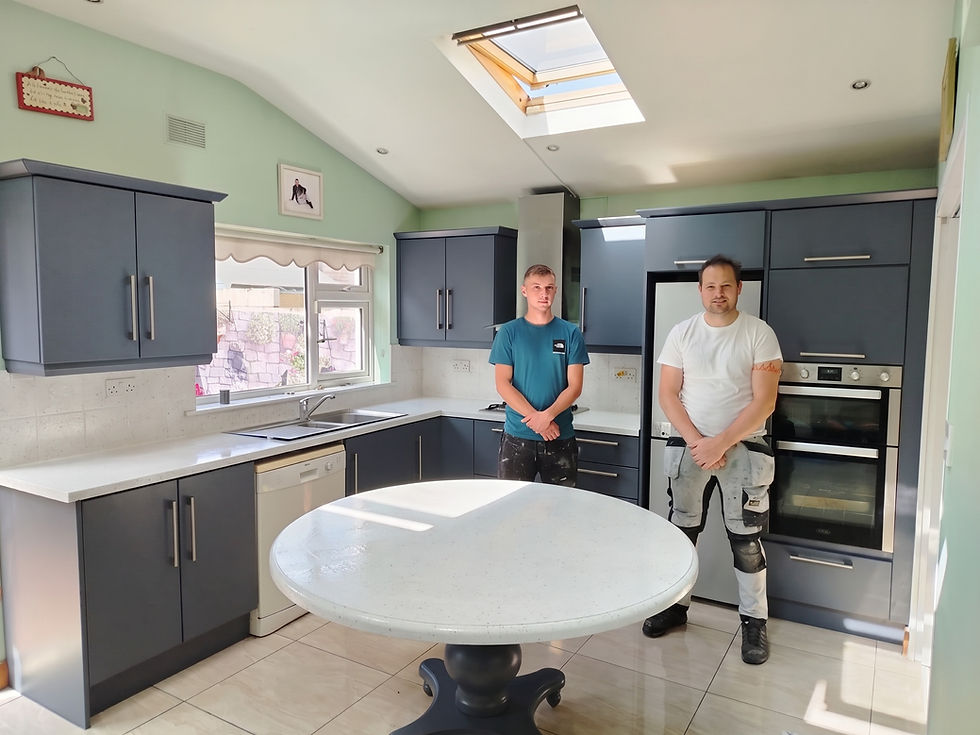
A respray quote is easiest to judge when it is broken into parts. A single line with one price and no detail tells you very little. A quote that lists the doors, the preparation and the paint tells you a lot. If you are collecting prices for a kitchen respray Dublin sprayers offer, this list shows what to look for and why each item matters.
The list uses general good practice. Where it mentions one company's method, the details come from that company's own website and are named as such. It does not quote prices, because every kitchen is different.
Quotes for the same kitchen can differ for good reasons. One sprayer may include more preparation, a better primer or extra coats. Another may leave those out and show a lower price. The only way to compare fairly is to see what each price covers. The eight points below make that possible.
1. The number of doors, drawers and panels
A fair quote starts with a count. Cabinet respraying is usually priced on the pieces that get sprayed, not on the size of the room. A large kitchen with few doors can cost less than a small one with many drawer fronts.
The cost page of one Dublin sprayer says exactly this. It states that it prices on the pieces it sprays, not the room. Its cabinet page adds that the first step is to count the doors, drawers and panels and give a fixed written price.
A red flag is a price with no count at all. Ask to see the count written down. Then walk round your own kitchen and check it. If the number is wrong, the price is wrong too.
2. The door type and its condition
Not every door is the same. Painted MDF, solid timber, laminate, vinyl wrap and high gloss all behave differently under paint. A quote should name the type and note the condition.
The company's pages list which types it can spray, and they say doors must be firm enough to keep. Swollen, badly broken or ill-fitting doors need repair or replacement first. A good quote does not hide this. It tells you which doors are fine and which need work before they are painted. Be wary of a quote that promises the same result for every door without looking at them.
3. The preparation steps, named one by one
Most of the work in a respray happens before any colour goes on. Preparation decides how well paint grips. A quote that says only "spray all doors" skips the most important part.
Look for these steps in writing:
Degrease every surface
Sand or key the surface by hand
Fill chips and dents
Mask worktops, appliances, walls and floors
Remove handles and hinges, or protect them
The company's cabinet page describes degreasing and hand preparation as the step that decides how long the finish lasts. You do not need to agree with every claim a sprayer makes. You do need to see that preparation is listed, not assumed. If the sprayer cannot say what happens to grease near the hob, that is a warning sign, because grease on a surface is a well known cause of poor paint grip.
4. The primer and the number of coats
Primer helps paint stick to the surface below it. Different doors need different primers. A quote should name the primer type and say how many topcoats follow.
One example is Dublin Kitchen Respray, a Kinsealy-based company. Its cabinet page describes a bonding primer suited to the door type, including laminate, vinyl wrap and high gloss, followed by two topcoats in the chosen colour and sheen. Those are the company's own figures. Another sprayer may use a different method, and that is fine, as long as it is written down. A quote that never mentions primer deserves a question.
Gloss often needs extra coats. If a quote for gloss is higher than a quote for matt, ask why. A clear answer about coats is a good sign when you compare a kitchen respray Dublin homeowners can book with others in the area.
5. The colour and sheen, by name or paint code
Do not accept "white" or "grey". A shade should be named or given as a paint code. Brand charts such as Farrow and Ball, Colourtrend and Dulux all use codes, and the company's cabinet page says it can match a shade from those ranges by code.
The sheen needs a name too. Matt, satin and gloss look different and clean differently. If the quote does not say which one you chose, the first time you find out may be on the day the work is done. Ask for a sample on a spare door or board if you can.
Colour also depends on the surfaces around it. Take the door sample home and hold it against your worktop, tiles and floor. A shade that suits a showroom wall may look quite different next to your own units. Good sprayers expect this and are glad to confirm the code before the tin is opened.
6. What is included, and what is not
Some quotes cover doors only. Others include drawer fronts, end panels, plinths and extras. A kitchen can also include a wardrobe, a utility press or a worktop. The cost page says extras such as wardrobes, utility presses, island units and spray granite worktops can be added to the same visit.
The quote should state the following:
Which parts of the kitchen are sprayed
Whether handles are removed and refitted
Whether the doors are rehung afterwards
Whether the room is cleaned down at the end
Which extras are included and which cost more
The cabinet page lists reassembly, handles refitted and a clean down as the last steps. A line like that in your own quote means fewer surprises later. Also check who is responsible for moving appliances. Do not assume it is included.
7. Time on site and what you need to do beforehand
Ask how many days the work will take, and whether the sprayer works on site or removes the doors. The company's cost page gives 1 to 3 days for most kitchens, depending on size. Its cabinet page asks you to clear the worktops and remove the contents of included units beforehand. Web pages can show slightly different time ranges in different places, so a written figure on your own quote matters more than any page.
Ask whether the kitchen can still be used during the job. The company's cabinet page says you can use the room once the work is complete, which is a different thing from using it while the paint is still setting. Ask about access too. Will the sprayer need parking close to the house, a water supply or a spare room? A good quote answers these questions before you have to ask.
One more habit helps with every item above. Keep the quote and any messages in one place. If the finished job differs from what was written, you have a clear record to go back to, and a calm conversation is far easier with a document in hand.
8. A fixed price, a portfolio and a closing check
The last item holds the rest together. A quote should be fixed before work starts, and it should say whether any extras can change it. The company's cost page says the written quote is fixed before any work starts and that travel outside Dublin is built into the fixed quote. Those are the company's terms, and any sprayer should be able to say the same in writing.
Ask to see finished work as well. Photos of real kitchens, taken in ordinary light, tell you more than a list of promises. Look at the door edges and corners, because that is where rushed work tends to show first. Check whether the kitchens in the photos look like yours in age, door type and style.
When you have two or three quotes, put them side by side and tick off the eight points. The best kitchen respray Dublin quote is not always the cheapest. It is the one that shows its working. Choose the sprayer who can answer every point in writing, and keep that quote safe until the work is done.
Comments