Kitchen Respray Ballyfermot: What Happens on Site, Hour by Hour
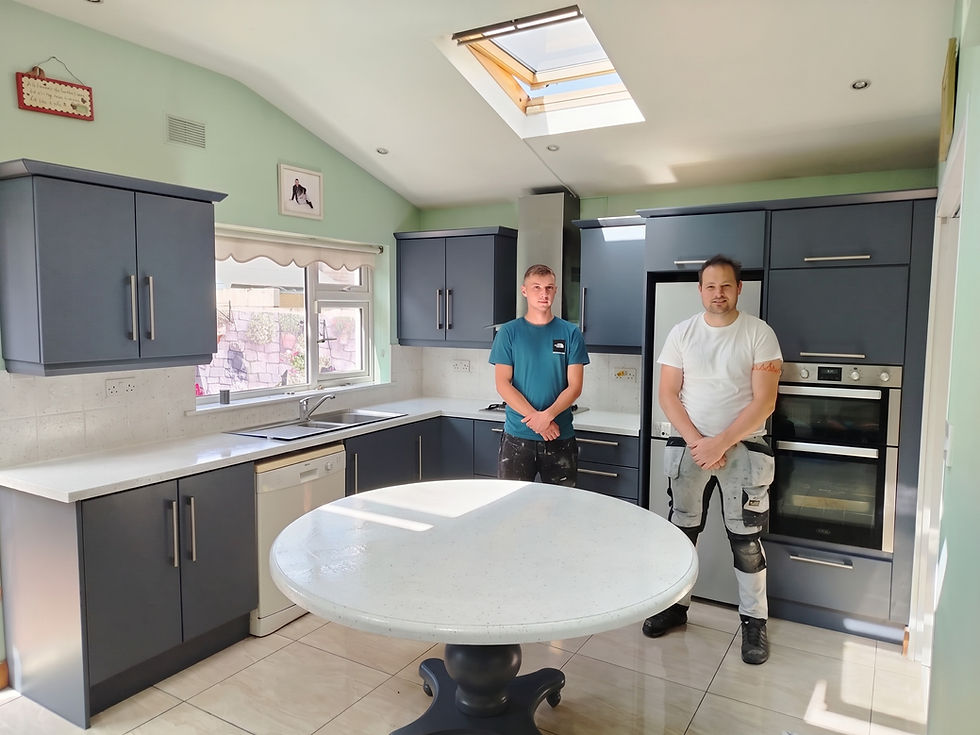
Most people picture a kitchen makeover as weeks of dust, skips and takeaways. A kitchen respray Ballyfermot homeowners book works differently, because the units stay where they are. The doors and frames get a new finish in the room, and the kitchen is usable again within days.
This walkthrough follows a typical job from the first knock to the last check. The timings below are an illustrative example for a small kitchen, not a record of one real customer. Where a figure comes from a company's published guide, the text says so.
Before anyone picks up a spray gun
A respray starts with a quote, and a good quote starts with photos. Send a few clear pictures of the doors, the drawer fronts and any damaged edges. Count the doors too. The door count drives the price and the time on site more than any other detail.
Next comes the colour decision. Ballyfermot homeowners often pick from a short list. A Dublin 10 sprayer lists off white, soft grey and sage as popular choices in the area. Hold a sample against your worktop and your floor, and check it in morning and evening light before you commit.
Hour 1: Clearing and masking
The first hour has no paint in it at all. Doors come off, and each one is labelled so it returns to the same hinge. Handles, hinges and soft-close fittings are removed and bagged. Everything that must not get paint is covered: walls, floors, appliances, the hob and the window.
Masking is slow work, and it decides how clean the edges look at the end. A sprayer who rushes this step leaves paint on tile grout and cooker hoods. Ask what will be covered and how.
Hours 2 to 4: Cleaning, sanding and priming
Kitchen doors collect grease, even when they look clean. The surface is degreased first, because paint will not hold on a film of cooking oil. Then the finish is sanded by hand so the new coat has something to grip. Chips and dents are filled and smoothed.
Primer comes next. Primer is a bonding layer that sits between the old surface and the colour. Melamine, laminate and old lacquered wood each need a primer that suits them. Skipping it is the most common reason a sprayed finish peels later.
What can go wrong, and how a sprayer handles it
Three problems turn up often. Each has a standard fix.
Swollen door edges: Damp near the sink lifts the surface. The sprayer sands the edge back, fills it and seals it before priming.
Loose hinge holes: Years of use wear the screw holes. A quick repair gives the hinge a firm hold again.
Old wax or polish: Silicone and wax repel paint. They must be cleaned off fully, or the colour will fish-eye, which means it pulls away in small round patches.
A sprayer who finds one of these should tell you at once, with a clear note on cost. Surprises on the final day are a sign of poor planning.
Hours 5 to 8: Spraying the colour
Spraying gives a smooth, even coat with no brush marks. The sprayer applies thin layers and lets each one flash off, which means the solvent or water evaporates enough to take the next coat. Thin layers run less than one thick layer does.
Here is where the choice of company matters. One Kinsealy-based specialist describes its method on its Ballyfermot kitchen respray page: the existing carcasses stay in place, and the doors and frames are prepared by hand before being sprayed in the customer's chosen colour. The page puts most Ballyfermot kitchens at one to three days, depending on the number of doors.
Timings for a kitchen respray Ballyfermot job, by kitchen size
Time on site grows with the door count. The company's published guide gives these bands, and it says travel is included in the price.
Kitchen size | Guide price | Time on site |
Small, up to 10 doors | €700 to €1,000 | 1 day |
Medium, 10 to 15 doors | €1,250 to €1,400 | 1 to 2 days |
Large, 15 to 20 doors | €1,400 to €2,000 | 2 days |
Very large, with island | €2,000 to €3,000 | 2 to 3 days |
These are guide bands, not fixed quotes. Door count, damage and the type of surface can move the final number.
Drying and curing: the part nobody sees
A sprayed door feels dry long before it is hard. The surface may be touch dry in a few hours, but a full cure takes longer. During that window the finish marks easily. Fingernails, wet cloths and heavy cleaning products can all leave a dent or a dull patch.
Ask the sprayer for aftercare advice in plain words. A good answer covers when you can refit the doors, when you can load the drawers and when it is safe to scrub. Keep the first clean gentle, with a soft cloth and mild soap.
Living in the house while the work runs
Because the units stay in place, the room is not out of action for long, but it is not a normal kitchen either. Plan meals around that. On a one-day job, you can often manage with a kettle, a microwave and takeaway for one evening. On a three-day job, set up a small tea station in another room.
Clear the worktops before the team arrives. Move small appliances, plants and food out of the room. Keep pets and children away from the area, because wet paint and tools do not mix with either. Open a window when you can, and ask about odour: low-odour water-based coatings are common now, and they make the evening far easier.
Refitting and the final check
Once the doors are dry enough, they go back on their hinges. The sprayer adjusts each one so the gaps are even. Handles go back on, or new ones go in if you changed them. Then comes the walk-round.
Use a torch and check three things. Look along each door at a low angle for runs and rough patches. Check the edges, where thin paint shows first. Open every door and drawer to confirm nothing rubs or sticks. Raise any problem on the day, while the sprayer is still there.
A short checklist before you book
Use this list when you ring round. It takes ten minutes, and it separates careful sprayers from careless ones. Write the answers down so you can compare quotes side by side, rather than relying on memory.
Count your doors and drawer fronts, and photograph each wall of units.
Ask which primer suits your current surface.
Confirm what gets masked and what gets removed.
Request the colour as a physical sample, not a screen image.
Get the time on site and the price band in writing.
Ask when the finish is fully cured, and how to clean it.
Is a respray right for your kitchen?
A respray suits kitchens where the boxes are sound and the layout works. If the carcasses are swollen, the layout frustrates you or the worktop is failing, a respray will not fix that. In that case a partial replacement may be the better route.
For a solid kitchen with tired colour, though, a kitchen respray Ballyfermot households choose can cost a fraction of new units and takes days rather than weeks. Compare two or three quotes against the checklist above. The one that explains its prep, its primer and its timings clearly is usually the one that has done the work many times.


Comments